


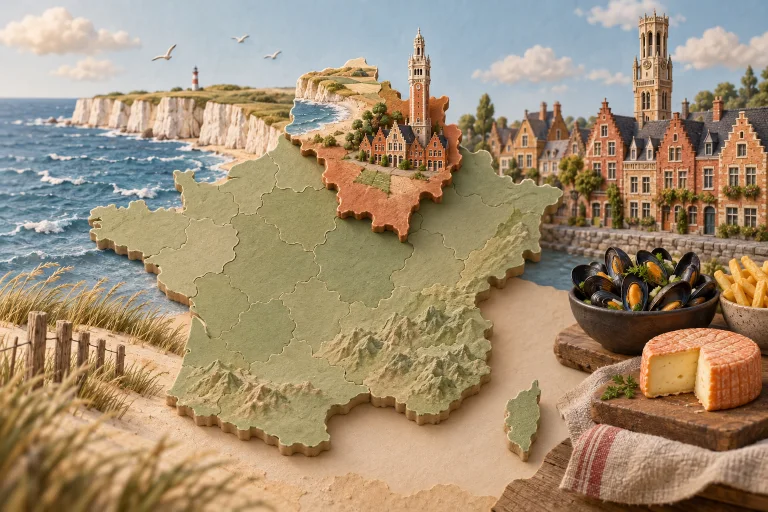

Flemish Carbonnade from Hauts-de-France

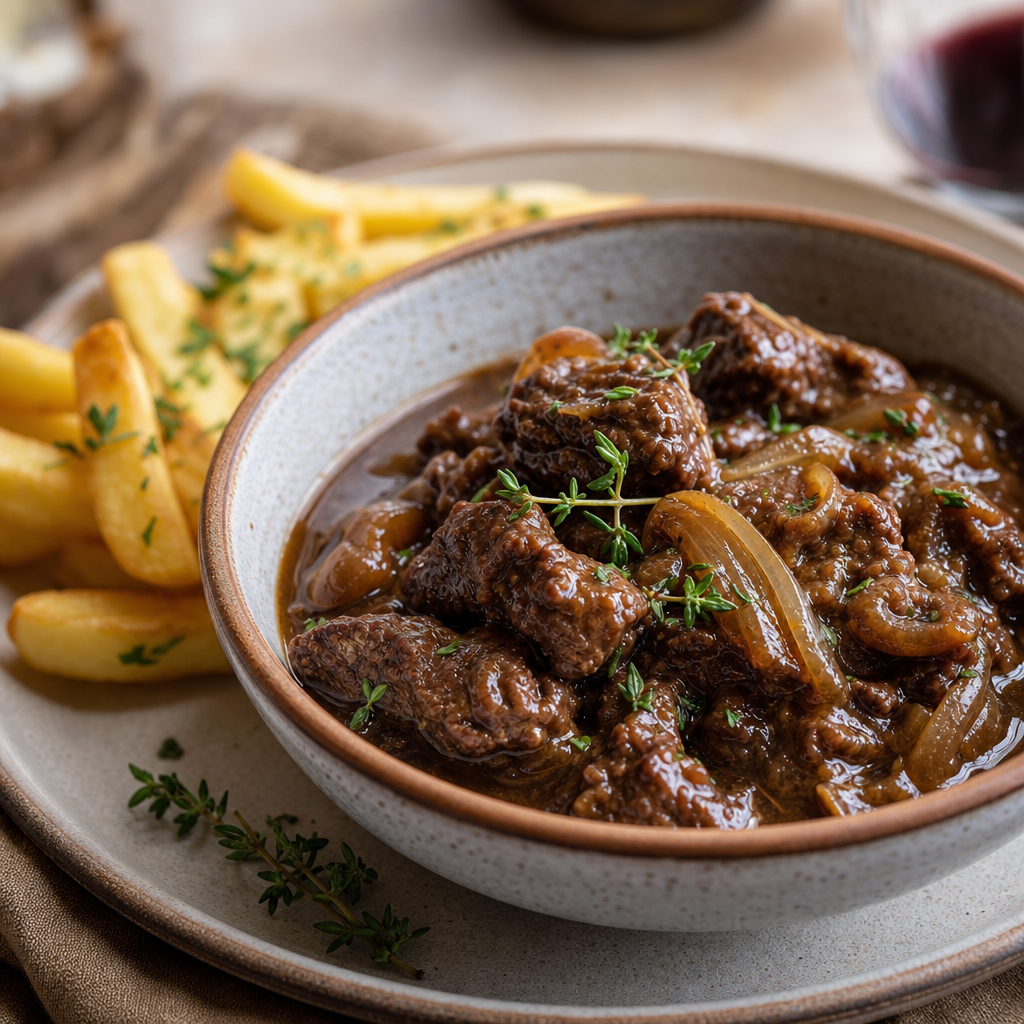 AI-generated
Article
I often cook the way I write here: without putting on airs, with a clear preference for straightforward, slow-cooked dishes that are simple enough to let the flavour speak for itself. At LaBouffe, when I think of a recipe that truly reflects me, I always come back to Flemish carbonnade from Hauts-de-France. I associate it with a familiar atmosphere, somewhere between coming back from Vieux-Lille, stopping by the Halle, or an evening when I get home after walking around the Citadelle or the Jardin Public in Cambrai. It is not a dish that tries to impress; it is a dish that takes its time, and that is precisely what I love about it. For 4 people, I generally use 1 kg of braising beef, 3 large onions, 75 cl of dark beer from Hauts-de-France, 4 slices of gingerbread, mustard, 2 bay leaves, a little thyme, 1 spoonful of brown sugar, butter, salt and pepper. I gently cook the onions in butter until they become tender and almost confit, then sear the meat in small batches so that it browns properly rather than boils. I then add the brown sugar, return all the meat to the casserole, pour in the beer, add the bay leaves and thyme, and place the mustard-spread slices of gingerbread on top. I cover it and let it simmer for a long time—at least 2½ hours, often longer—because it is patience that turns the sauce into something deep, rounded and unmistakably northern.
Information
Where: Hauts-de-France