


My Herb, Vinegar and Sauce Tips for Cooking from Centre-Val de Loire

 AI-generated
Article
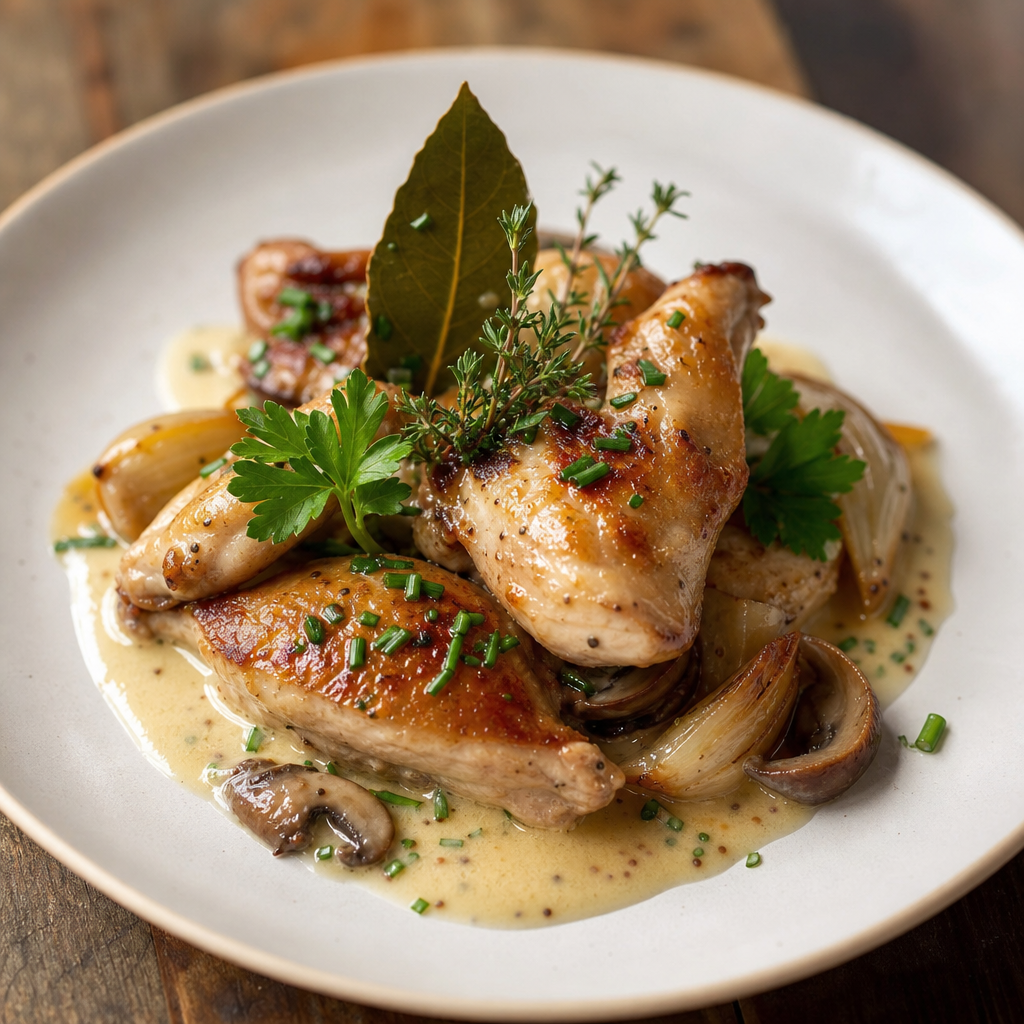
I often cook Centre-Val de Loire the way I write: I start with a clear foundation, then let the nuances do the rest. In the kitchen, I am wary of overly pronounced effects; I prefer aromatics that enhance rather than overpower. In my routine, flat-leaf parsley, chives, tarragon, thyme and bay leaf come up often, but here I give them a distinctly local place thanks to two touchstones I have relied on for a long time: Orléans vinegar and Loire white wines. When I return from a walk along the Loire riverbanks in Orléans or a detour near Place Plumereau, I crave a clean, lively plate, with the understated elegance found at the tables of Touraine and Berry. I think that is where herbs take on their full meaning: they do not decorate; they tell a story. In practical terms, I always keep what I need on hand to make a short, well-balanced sauce. For Loire zander or pike, I reduce a shallot with a splash of Orléans vinegar and a little dry white wine, then whisk in butter, finishing with chives and a hint of tarragon; the result is a very regional, straightforward sauce that respects the fish without overwhelming it. On Touraine asparagus, a Berry lentil salad or even a warmed Crottin de Chavignol, I prefer a sharper vinaigrette with mustard, parsley, chervil and a touch of finely chopped shallot: I get the product’s dimension without losing its delicacy. I also like to add thyme and bay leaf to slow-cooked poultry or winter vegetables, then wake everything up with a few drops of vinegar just before serving. For me, that is the most useful tip in LaBouffe: choose few elements, but reliable ones, typical of the region, and let them speak with precision.
Information
Where: Centre-Val de Loire