

When It Gets Sticky in Occitanie
Article
“Ça pègue” means exactly “it sticks.” It is used when a material, surface, or even an object becomes sticky, tacky, or a little unpleasant to touch. In everyday French, it can be translated as “it sticks,” “it’s sticky,” or, depending on the context, “it’s tacky.” It is a very lively regional expression in Occitanie, especially in spoken language and everyday exchanges. It has a slightly amusing quality because it sounds simple and direct, and the idea is immediately clear without any need to beat around the bush. You might hear it in ordinary situations, when something adheres too much or leaves a sticky feeling. For example: “Be careful, the syrup spilled on the table—it’s sticky!” Or: “I touched the adhesive; now my fingers are a little sticky.” Common usage (informal): it is mainly used in speech, among people who know each other, in natural exchanges. Example 1: “Here, when we say ‘Ça pègue,’ everyone understands straight away.” Example 2: “You can simply say: ‘Ça pègue,’ and the message comes across without any fuss.” Origin / context: this expression has become established through everyday use in Occitanie, shaped by local habits, oral transmission, and small regional nuances. Selected category: Funny expressions. Living usage: “Ça pègue” is often used to raise a smile, lighten an exchange, or emphasize a reaction with a small local touch.
Information
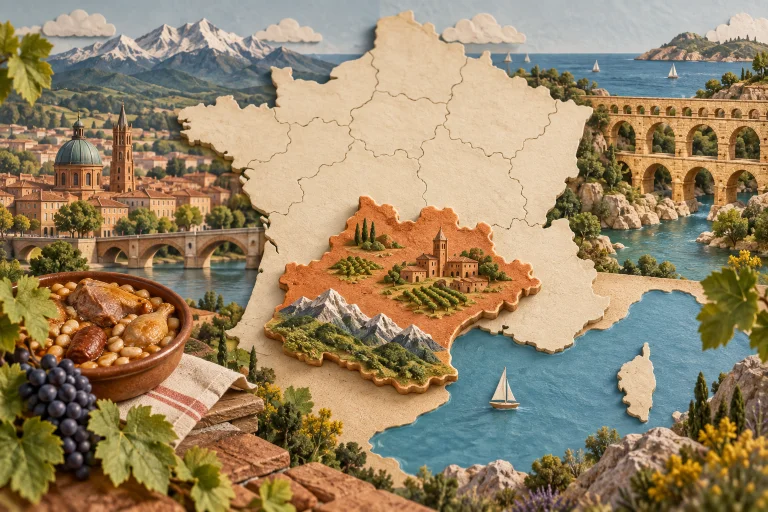
Where: Occitanie