


Engineering That Commands Silence: Benedictine Palace (Fécamp)
 AI-generated
Article
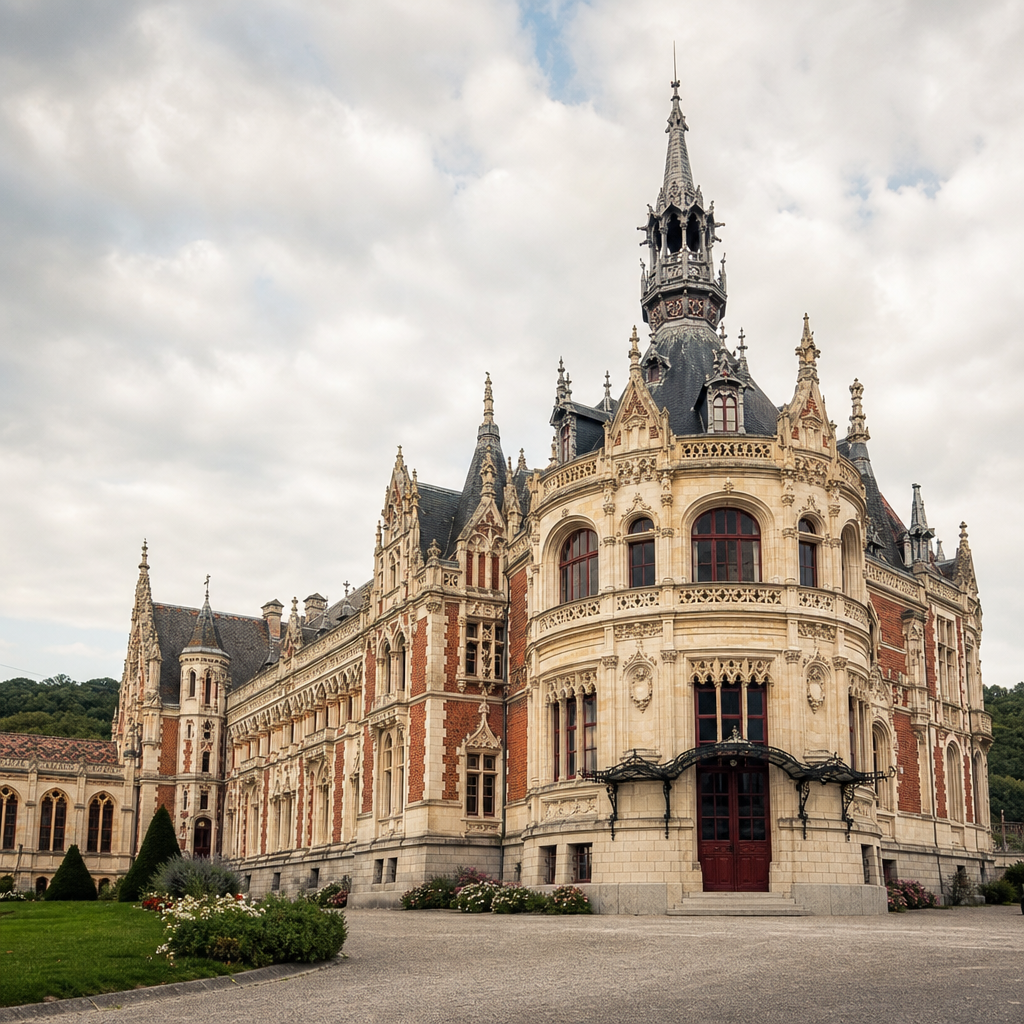
# Benedictine Palace in Fécamp: a neo-Gothic palace in the service of a liqueur In Fécamp, the Benedictine Palace is no ordinary distillery. Built at the end of the 19th century for Alexandre-Prosper Le Grand, a spirits merchant who became wealthy through the invention and marketing of Bénédictine liqueur, it immediately asserts a spectacular ambition. The building combines neo-Gothic and neo-Renaissance styles in deliberately exuberant architecture. This palace was designed by the architect Camille Albert and built by Ernest Baron using local materials and techniques. Its silhouette reveals a singular concept: a place intended to produce and store a liqueur, yet conceived as a monument. ## Why make the detour The Benedictine Palace brings together a distillery, cellars and a museum under one roof. This combination is what makes it so distinctive: the industrial history of Bénédictine is revealed within an architectural setting far more monumental than one would expect from a production site. The museum holds diverse collections, including carved ivories, coins, locks and old religious paintings. A space dedicated to contemporary art was also created in 1988. Between the antique objects, the liqueur-related activity and the historicist architecture, the palace offers a visit open to several interpretations. Even from the outside, the building stands out through the contrast between its purpose and its appearance. Here, the making of a spirit is told through the forms of a palace. ## The best time The Benedictine Palace is particularly well suited to a day of exploration in Fécamp, for those seeking a visit combining heritage, architecture and local history. Its appeal does not depend on any particular season: the collections, distillery and cellars make it a place to consider throughout the year. To find out about visiting conditions, any exhibitions currently on display and current access arrangements, it is best to consult the official Benedictine Palace information before setting off. ## Preparing your visit It is helpful to approach the site with its three dimensions in mind. First, the palace is linked to Alexandre-Prosper Le Grand and the commercial development of Bénédictine liqueur. It is also a late-19th-century building designed in a neo-Gothic and neo-Renaissance vocabulary. Finally, it houses collections that extend far beyond the world of spirits alone. Taking time to observe the architecture before entering provides a better sense of the project’s ambition: to turn the history of a liqueur into a monumental experience, between production, preservation and the staging of heritage. ## Access and landmarks The Benedictine Palace is located in Fécamp, in Seine-Maritime, Normandy. Its eclectic architecture makes it a strong visual landmark in the town: the meeting of neo-Gothic and neo-Renaissance styles immediately sets it apart from an ordinary industrial building. Inside, the distillery and cellar spaces stand alongside the museum and its collection of antique objects, as well as an area devoted to contemporary art. This coexistence encapsulates the identity of the Benedictine Palace: a monument born of industry that has also become a place of collections and culture.
Information
Where: Fécamp — Normandie
URL : https://fr.wikipedia.org/wiki/Palais_B%C3%A9n%C3%A9dictine