

Ch’est pas possible! The Northern way of saying something is impossible
Article
Ch’est pas possible! means exactly “that’s not possible.” It is a regional expression, typical of Hauts-de-France, used to say that something seems impossible, unlikely, or simply inconceivable at the time. In everyday French, it would be rendered as “that’s not possible,” “it’s impossible,” or “that can’t be.” The idea is the same, but with a little local flavour that immediately brings a smile. It is mainly used in spoken language, in everyday life, when reacting to news, a situation, or an idea that seems too incredible to be true. Example 1: “What, he finished the building site in one day? Ch’est pas possible!” Here, the person means they do not believe it at all. Example 2: “You’re telling me it’s snowing in April? Ch’est pas possible!” Once again, the expression is used to convey surprise or disbelief. This phrase comes from the local speech of Hauts-de-France, where the accent and certain turns of phrase give French a very distinctive flavour. It is one of those everyday expressions that sounds familiar, direct, and a little mischievous too. In short: “Ch’est pas possible!” is a local way of saying things, with the same underlying meaning as in standard French, but a livelier tone that is more firmly rooted in the region. Origin / context: this expression became established through everyday use in Hauts-de-France, shaped by local habits, oral transmission, and small regional nuances. Selected type: Funny expressions.
Information
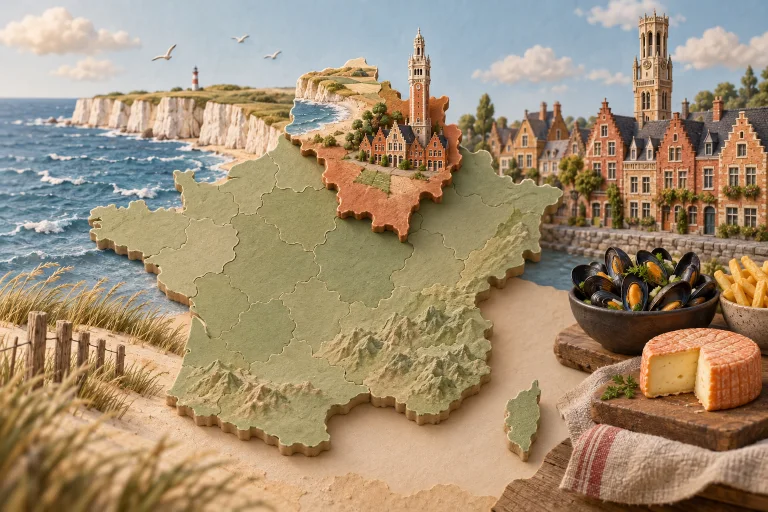
Where: Hauts-de-France