

“Did You Have a Flammekueche?”: the Grand Est joke

Article
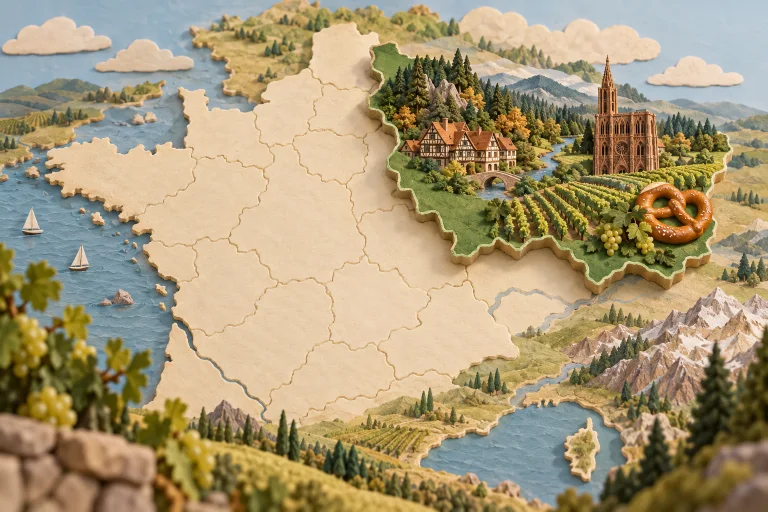
This expression is used to tease someone in a light-hearted, amused way. It really means something like: “What happened to you?”, “Did you get hit?”, or “Why is your face so red?” It is not a serious question: it is a local wink meant to raise a smile, often when someone looks embarrassed, overheated, or a little dazed. In everyday French, it could be rendered as: “Did you get hit?”, “Did you blush?”, or “You look completely shaken up.” It is mainly used orally, in casual conversation, to make a harmless little joke. For example: “Oh, did you have a flammekueche or what? You’re bright red!” Second example: “He walks in with a mark on his cheek, and everyone says to him: ‘Did you have a flammekueche?’” The image comes from tarte flambée, a well-known specialty of the Grand Est region, especially Alsace. The expression plays on this local dish to create a funny phrase typical of everyday regional life. It is the kind of line you say quickly, with a smile, to add a little salt — or cream — to the conversation. Put simply: “Did you have a flammekueche?” is a local way of saying things, with the same underlying meaning as in standard French, but with a livelier tone more firmly rooted in the region. Origin / context: this expression became established through everyday use in the Grand Est, shaped by local habits, oral transmission, and the area’s small linguistic nuances. Category selected: Funny expressions.
Information
Where: Grand Est