


In Greece, I Find the Right Balance Between Frappé Coffee, White Wines and Ouzo

 AI-generated
Article
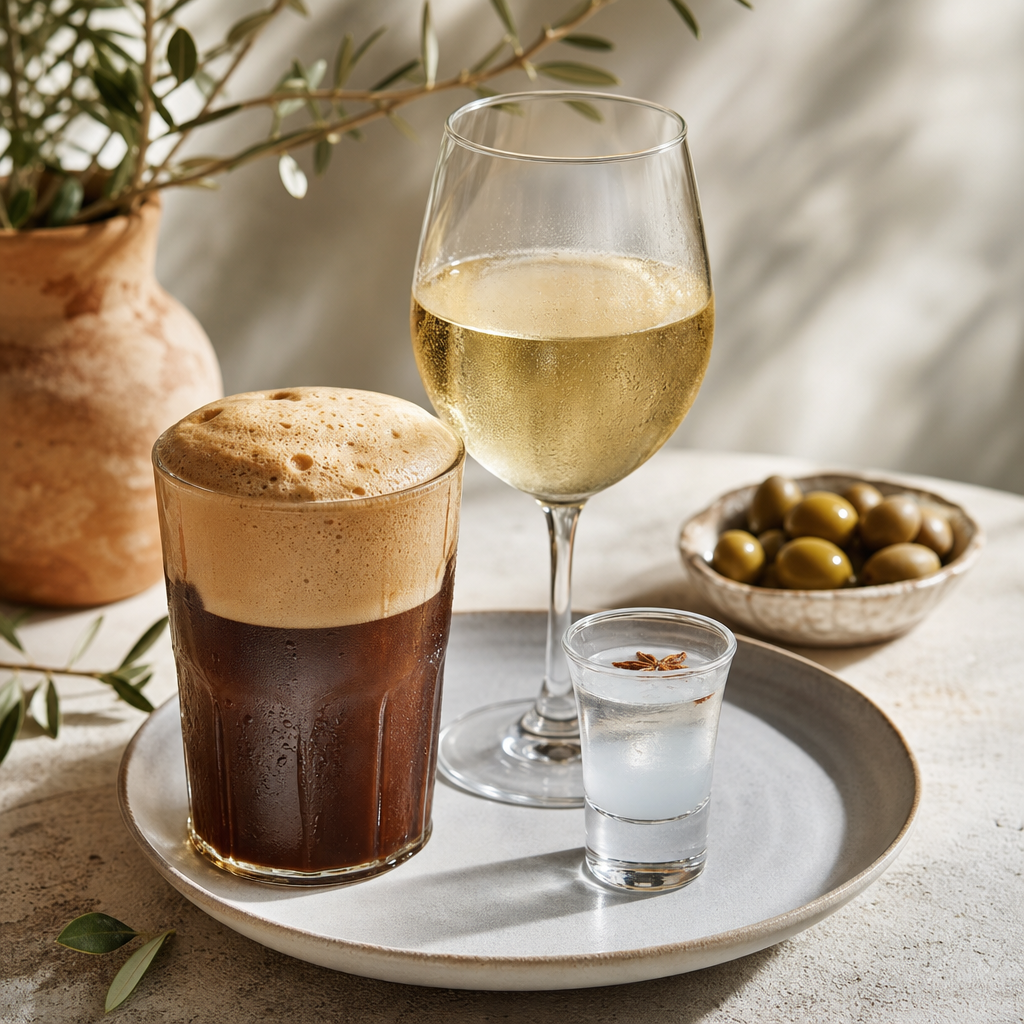
I prefer quiet honesty to grand declarations, and that is exactly how I approach drinks in Greece. When I think of the Greek table, I do not just see a glass set beside a dish: I see a rhythm. In Athens, amid the atmosphere of Plaka, I understood that Greek coffee, strong and no-nonsense, is not merely a pick-me-up; it accompanies a genuine pause, often with a small dry biscuit, a koulouri or a slice of savoury pie. Later in the day, I am happy to switch to a nicely frothy frappé coffee or a mountain tea, tsai tou vounou, which feels just right when I want to stay balanced without giving up pleasure. In the way I eat, that is what I like about LaBouffe: a drink that does not take centre stage, but supports the moment, the flavour and the conversation. I then see Greek drinks as allies at the table, not as stylistic flourishes. For an aperitif, ouzo has its place when I serve olives, tarama, courgette fritters or a few small grilled octopuses; I prefer it diluted with water, because it opens up without overwhelming the mezzes. Tsipouro, more forthright, seems perfect to me for a long meal, especially with cheeses, cured meats or roasted vegetables, while a glass of retsina feels entirely convincing with a tomato salad, grilled fish or a still-warm spanakopita. As for non-alcoholic drinks, I like to save vyssinada, this sour-cherry syrup diluted with water, for late afternoons when I crave freshness and colour, and I find that homemade lemonade or local orange juice go very well with a simple breakfast. In practical terms, I often do two things: I serve mountain tea with a tyropita for an afternoon snack, and I save the ouzo for a mezze dinner where flavours mingle slowly. This is the way of drinking that speaks to me: I stay in the right balance, in sharing, in a discreet elegance that leaves room for Greek cuisine itself. Alcohol abuse is dangerous for your health. Drink in moderation.
Information
Where: GR