

In Spain, My Drink Tips: Between Vermouth, Horchata and Tinto de Verano

 AI-generated
Article
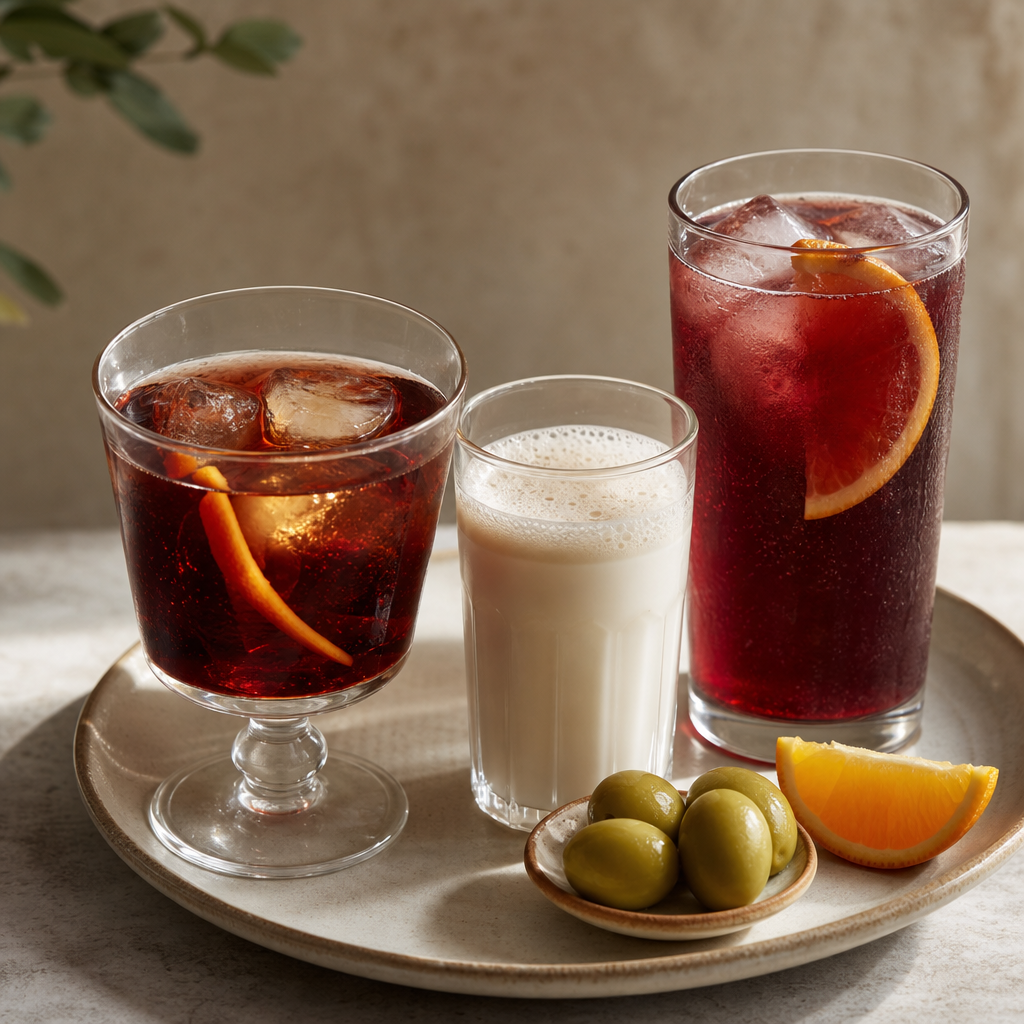
I never choose a Spanish drink at random, because I like the glass to extend the moment rather than merely fill it. In the LaBouffe section, under the Tips tag, I often come back to this very simple idea that resonates with me: in Spain, I match my cravings to the time of day, the heat, the salt and the company. At the start of the evening, I first think of vermut rojo, served well chilled with olives, a slice of orange and a few tapas, because for me it is the most evocative Spanish aperitif when I want to whet the appetite without weighing things down. I also like it because it pairs beautifully with jars of seafood, boquerones, patatas bravas or a cheese board, and immediately sets a slower, more convivial, almost musical pace. When I want something drier, I turn to fino or manzanilla, especially with salty flavours, as these typical Spanish aperitif wines cleanse the palate elegantly and leave room for flavour. I also make real room for non-alcoholic drinks, because I believe in simple pleasures that are as good for the body as they are for the heart. By the sea in Barcelona, I have often stopped for a well-chilled horchata de chufa, especially in mid-afternoon, and I think of it as a gentle pause, almost a liquid dessert, which I like to serve with fartons or a dry biscuit. When the heat rises, I prefer a light tinto de verano, also very Spanish, because it complements rather than overwhelms a tortilla, grilled sardines or a salad of perfectly ripe tomatoes. And at the end of a meal, I readily think of a Catalan cava for festive days, or a small glass of orujo when I want something more forthright and digestif-like. My tip, ultimately, is this: I always choose the drink according to the dish and the moment, and let Spain do the rest, with its generosity, clarity and its very fitting way of letting a meal breathe. Alcohol abuse is dangerous for your health. Consume in moderation.
Information
Where: Espagne