

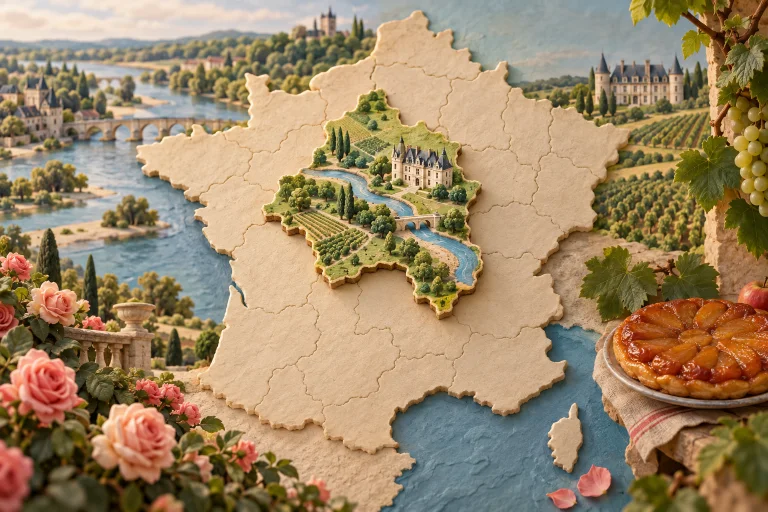
“That’s sure true”: the yes with the flavour of Centre-Val de Loire
Article
In Centre-Val de Loire, “C’est ben vrai” very simply means: “that’s right,” “that’s absolutely true.” In other words, the speaker straightforwardly confirms what has just been said, using a familiar turn of phrase that is very much local to the region. In standard French, it can be rendered as “c’est vrai,” “c’est juste,” or “c’est bien exact.” Its small local flavour comes from “ben,” the spoken form of “bien,” which gives the expression a livelier, more spontaneous, slightly mischievous tone—as though one were nodding in agreement. It is often used orally in everyday conversation. For example: “It’s cold today.” — “That’s sure true!” Or again: “You said we needed to leave earlier, and that’s sure true—we avoid the traffic jams.” It is a short, simple, and highly effective expression for saying that you agree without making a big speech. Origin / context: this expression became established through everyday usage in Centre-Val de Loire, shaped by local habits, oral transmission, and the area’s subtle regional nuances. Selected type: Funny expressions. Living usage: “C’est ben vrai” is often used to raise a smile, lighten the exchange, or emphasise a reaction with a small local touch.
Information
Where: Centre-Val de Loire