



Engineering That Commands Silence: Château de Chambord

 AI-generated
Article
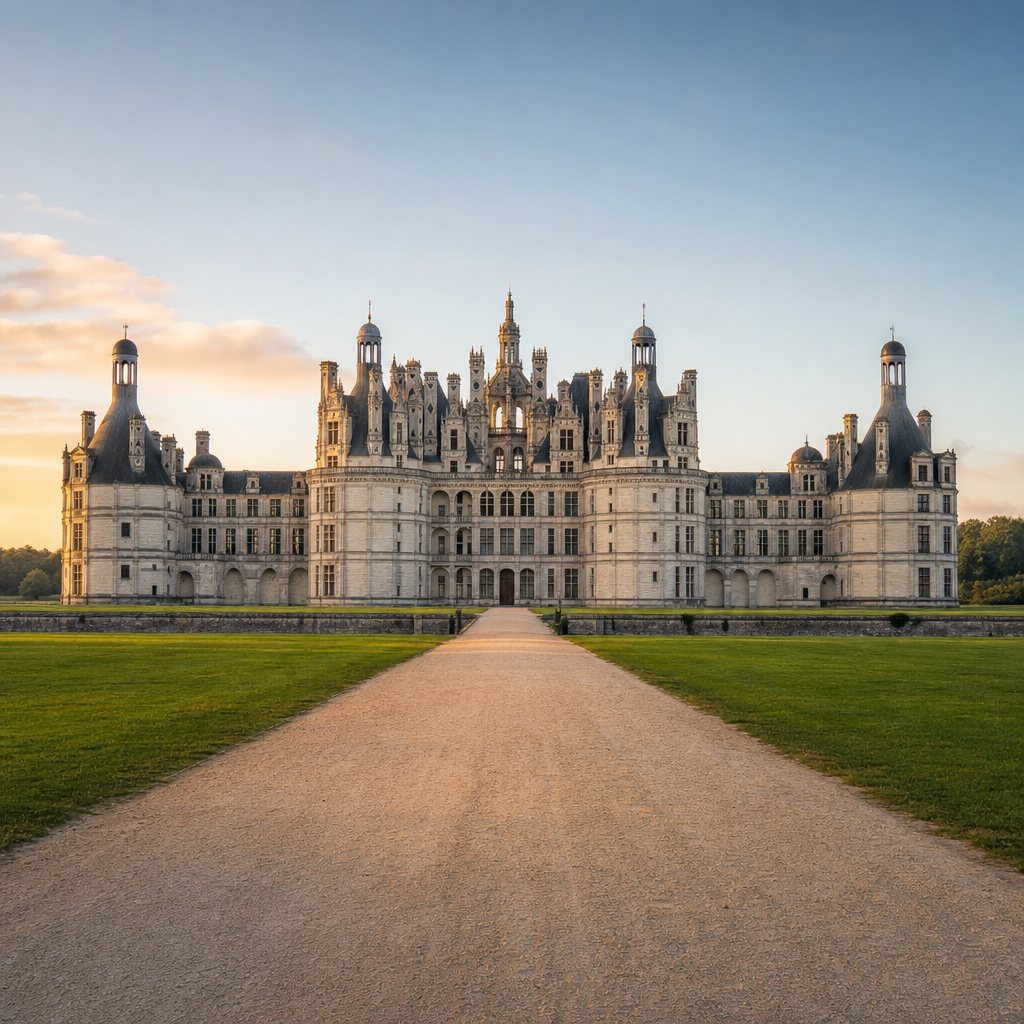
# Château de Chambord In the heart of Loir-et-Cher, 17 kilometres from Blois, the Château de Chambord rises as much as a display of power as a work of architecture. Its dense silhouette, bristling with towers, turrets and chimneys, is more than the image of a fairy-tale castle: it tells the story of the ambition of Francis I, who had one of the Loire Valley’s largest châteaux built here. Construction spanned from 1519 to 1547 and was overseen by Pierre Nepveu. Over those 28 years, Chambord underwent profound changes. As completion approached, Francis I received Emperor Charles V—his former rival—there: the château thus became a deliberate symbol of wealth and power. Its most striking feature remains its double-helix staircase. Two people can ascend and descend it without crossing paths, in a circular movement that gives the centre of the château an almost theatrical presence. It is a structure designed to astonish, but also to command silence before the scale of the gesture. ## Why make the detour Chambord is the largest of the Loire Valley châteaux. It stands in the middle of an immense enclosed forest estate of around 50 km², surrounded by a 32-kilometre-long wall. This park is described as Europe’s largest enclosed forest park. The estate retains a rare distinction: it is described as the only royal estate to have remained intact since its creation. The château, its ornamental garden and its hunting park are protected as historic monuments. Chambord also appears on the first French list of historic monuments, established in 1840. Its importance extends beyond the building itself. The site has been listed as a UNESCO World Heritage Site since 1981 and, since 2000, has formed part of the listed Loire Valley area between Sully-sur-Loire and Chalonnes. It has also been part of the Natura 2000 network since 2006 and belongs to the network of European royal residences. ## The best time Chambord is as much about its architecture as its relationship with the landscape. The château is best observed from its surroundings, in order to appreciate the contrast between its pale stone, lively rooftops and the expanse of forest around it. The season can change the atmosphere of the estate, as well as visiting conditions and the services available. Before setting off, it is wise to consult the château’s official information. ## Preparing your visit Allow time to take in Chambord as a whole, rather than simply walking through its rooms. The double-helix staircase is an essential landmark in the visit: it offers a direct reading of the site’s architectural ingenuity. The estate also includes an ornamental garden and a vast hunting park, both listed as historic monuments. The visit can therefore be experienced on several scales: the monumentality of the château, the details of its construction, and then the forest landscape that frames it. As access arrangements, open routes and visiting conditions may change, it is best to check the practical information on the estate’s official website before leaving. ## Access and landmarks The château is located in the commune of Chambord, in the Loir-et-Cher department of the Centre-Val de Loire region. Blois is the main nearby urban landmark, around 17 kilometres away. Once on the estate, Chambord’s silhouette is itself the best point of reference: a central mass surrounded by towers, dominated by a profusion of roofs and chimneys. Here, architecture does not seek discretion. It transforms a royal château into a landscape in its own right.
Information
Where: Chambord — Centre-Val de Loire
URL : https://fr.wikipedia.org/wiki/Ch%C3%A2teau_de_Chambord